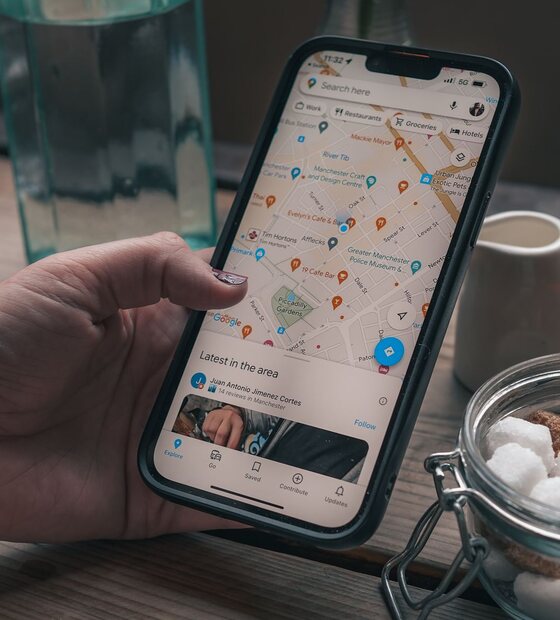
Local SEO isn't one thing. It's a collection of tasks that together determine how visible your business is when someone nearby searches for what you do. The challenge is that there's no single fix. Progress comes from doing several things reasonably well, consistently, over time.
This checklist covers the tasks that actually move the needle, organized in the order I'd tackle them. The reason for the ordering matters: some items are foundational, and the things you build later depend on getting them right first. If you try to do everything at once, you end up doing nothing well.
Don't try to do all of this at once. Finish one section fully before moving to the next. An incomplete Section 1 hurts you more than an unstarted Section 4.
Need a website that has local SEO built in from the start? See the local business website templates or check out the affordable website packages.
Section 1: Google Business Profile basics
Your GBP is the most influential single asset in local search. Everything else builds on it. If you haven't already addressed these, stop here until they're done.
- Claim your profile at google.com/business if you haven't already. An unclaimed profile can be edited by anyone who requests access.
- Complete verification. Google typically verifies via postcard, phone, or video. Until you're verified, your profile has limited visibility.
- Choose your primary category carefully. This is one of the most influential fields you'll fill in. Be as specific as possible: "House Cleaning Service" rather than "Cleaning Service," "Thai Restaurant" rather than "Restaurant."
- Add relevant secondary categories. You can add up to nine. Use ones that accurately describe services you actually offer.
- Write a business description. Use all 750 characters. Describe what you do, who you serve, and what neighborhoods or cities you work in. Write for a person, not a search engine.
- List every service individually. Don't lump everything into "General Services." Each service you list is another search term Google can rank you for.
- Add photos. At minimum: logo, cover photo, storefront exterior, interior (if applicable), and a few examples of your work. Aim for at least 10 before you start actively seeking reviews.
- Set accurate hours, including holiday hours and special hours for closures. Wrong hours cost you calls and generate bad reviews.
Section 2: NAP consistency
NAP stands for name, address, and phone number. Google cross-references your business information across dozens of sources to confirm you're a legitimate, established business. When the information doesn't match, it creates doubt, and doubt suppresses rankings.
- Audit your existing listings. Search your business name and see where you appear: Yelp, Facebook, Apple Maps, Bing Places, Yellow Pages, industry-specific directories, and any local directories. Note every discrepancy.
- Standardize your NAP format. Pick one format for your address ("Suite" vs "Ste", "Street" vs "St") and use it everywhere, exactly as it appears on your GBP.
- Claim and update Yelp. Whether or not you use it, your Yelp listing probably exists, and unclaimed listings often have outdated information.
- Claim Facebook Business. Set your address and phone to match your GBP. Facebook profiles rank in their own right and contribute to your citation footprint.
- Add your business to Apple Business Connect. Apple Maps is the default on iPhones, and many businesses never claim their Apple listing.
- Check the BBB listing. Even if you don't care about the BBB specifically, having a consistent, claimed listing there adds a credible citation.
Section 3: Reviews
Reviews are both a trust signal for potential customers and a ranking signal for Google. The two things you're aiming for are volume (enough to be credible) and recency (a steady trickle, not a one-time push). For more detail on building a review system, see why your business isn't ranking.
- Get your review link. In your GBP dashboard, find your "Share review form" link. This is the direct URL you'll send to customers. Copy it and save it somewhere accessible.
- Ask your most recent happy customers first. Think of five to ten people you've worked with recently who had a positive experience. Send them the link with a short, direct message.
- Respond to every existing review. Good and bad. Thank people who left positive reviews specifically. Address negative ones calmly and specifically. Your responses are public and visible to everyone who looks at your profile.
- Aim for at least 10 reviews before moving on. Below 10, your profile looks thin regardless of how well everything else is optimized.
- Build asking into your workflow. After every job, every appointment, every sale. Not as a campaign, but as a habit.
Section 4: Website optimization
Your website and your GBP work together. The GBP earns the click; the website should confirm everything the profile promised. For local search specifically, several technical and content factors matter a lot more than most web designers acknowledge.
- Include your city in the page title of your homepage and your primary service pages. "Electrician in Burbank, CA | Smith Electric" ranks for local searches. "Home | Smith Electric" does not.
- Include service plus city in your H1 headings. The H1 is the main heading on each page. It's one of the strongest on-page signals you have.
- Put your full address in the footer of every page. Format it exactly as it appears on your GBP. This is part of your NAP consistency across your own website.
- Add LocalBusiness schema markup. This is structured data in your page code that tells Google exactly who you are: your name, address, phone, hours, and service area. If you're not sure how to implement it, this is a good thing to ask a developer about.
- Improve mobile load speed. Run your site through PageSpeed Insights and look at the mobile score. Below 50 is a problem. Below 70 is worth addressing.
Section 5: Content
Content for local SEO isn't about blogging for its own sake. It's about giving Google specific, accurate pages to match to specific local searches. A few targeted pages do more than dozens of generic ones.
- Create one page per neighborhood or city you serve. If you serve Pasadena, Glendale, and Burbank, those should be three separate pages, each with real, specific content about what you do there, not just the same paragraph with the city name swapped out.
- Write a real About page that mentions your city and your history there. "Based in Los Angeles since 2015, serving the Eastside and surrounding neighborhoods" is more useful to Google than a generic bio.
- Build an FAQ page that answers local questions. What do customers in your area ask most often? What are the price ranges for your services in this market? What neighborhoods do you cover? Answer these questions in plain language.
Section 6: Local links
Backlinks from locally relevant sources are one of the harder things to build, but also one of the most durable. These don't have to be complex: the goal is to be mentioned and linked to from websites that are clearly associated with your city or community.
- Join your local Chamber of Commerce. Most chambers maintain a member directory that links back to your website. The link itself has local authority, and the membership looks good in other ways too.
- Sponsor a local event or organization. Schools, sports leagues, neighborhood events, and local nonprofits often list their sponsors on their websites with links. The link is worth as much as the goodwill.
- Get listed on city and neighborhood directories. Many LA neighborhoods have local business directories or community websites. Being listed on these gives you a locally-relevant citation and sometimes a backlink.
- Look for local press opportunities. A mention in an Eastside local publication, a neighborhood blog, or a community newsletter all carry local link authority that generic directories don't.
This checklist covers the full scope of local SEO, but you don't need to do it all this week. If you're starting from scratch, a realistic timeline looks like: Sections 1 and 2 this month, Section 3 as an ongoing habit starting now, Sections 4 and 5 next month, and Section 6 as an ongoing effort. Done at that pace, you'll see real movement within 60 to 90 days. If you want a closer look at what's missing on your specific site, the Google Business Profile guide is a good next read.