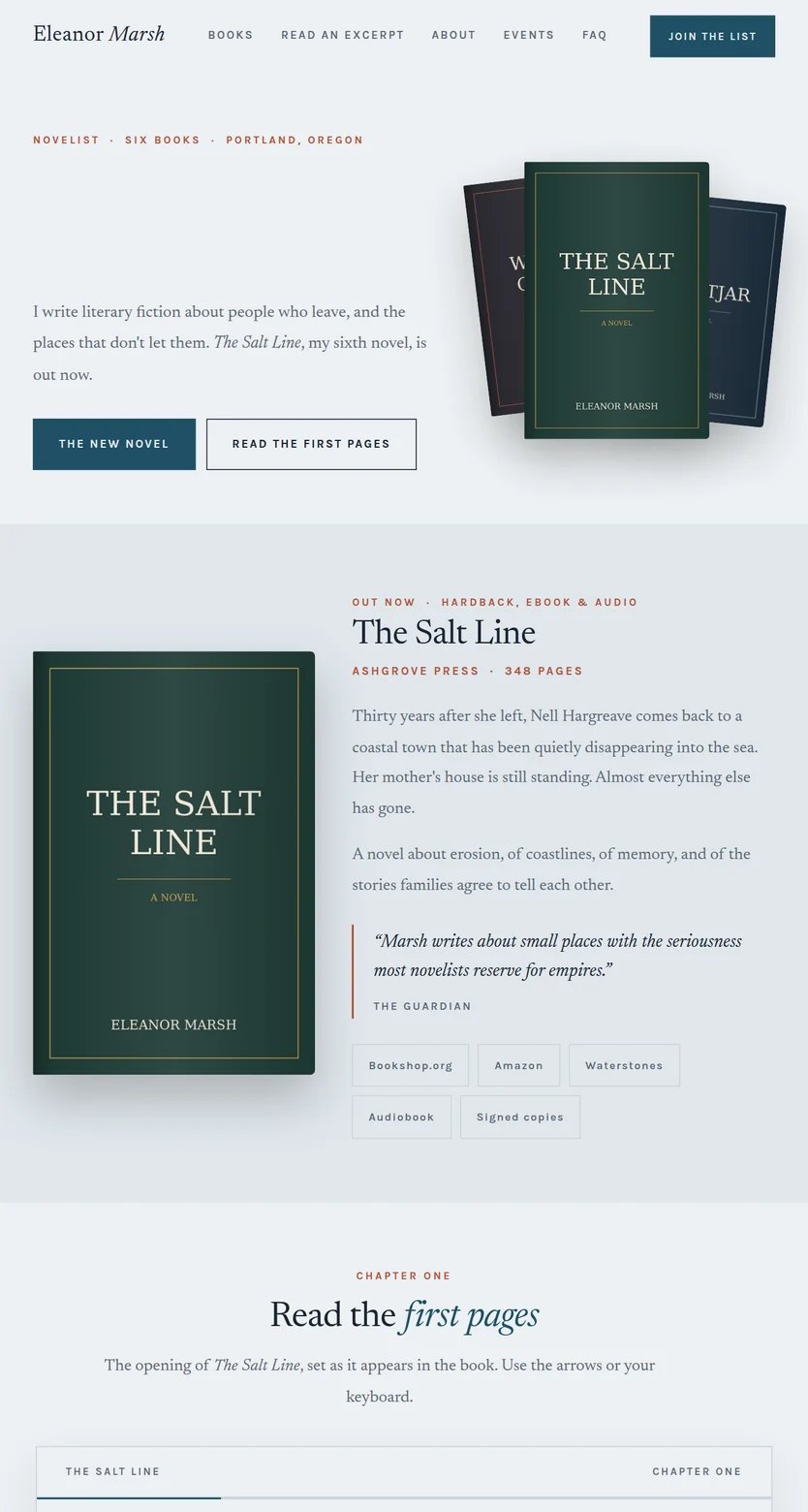
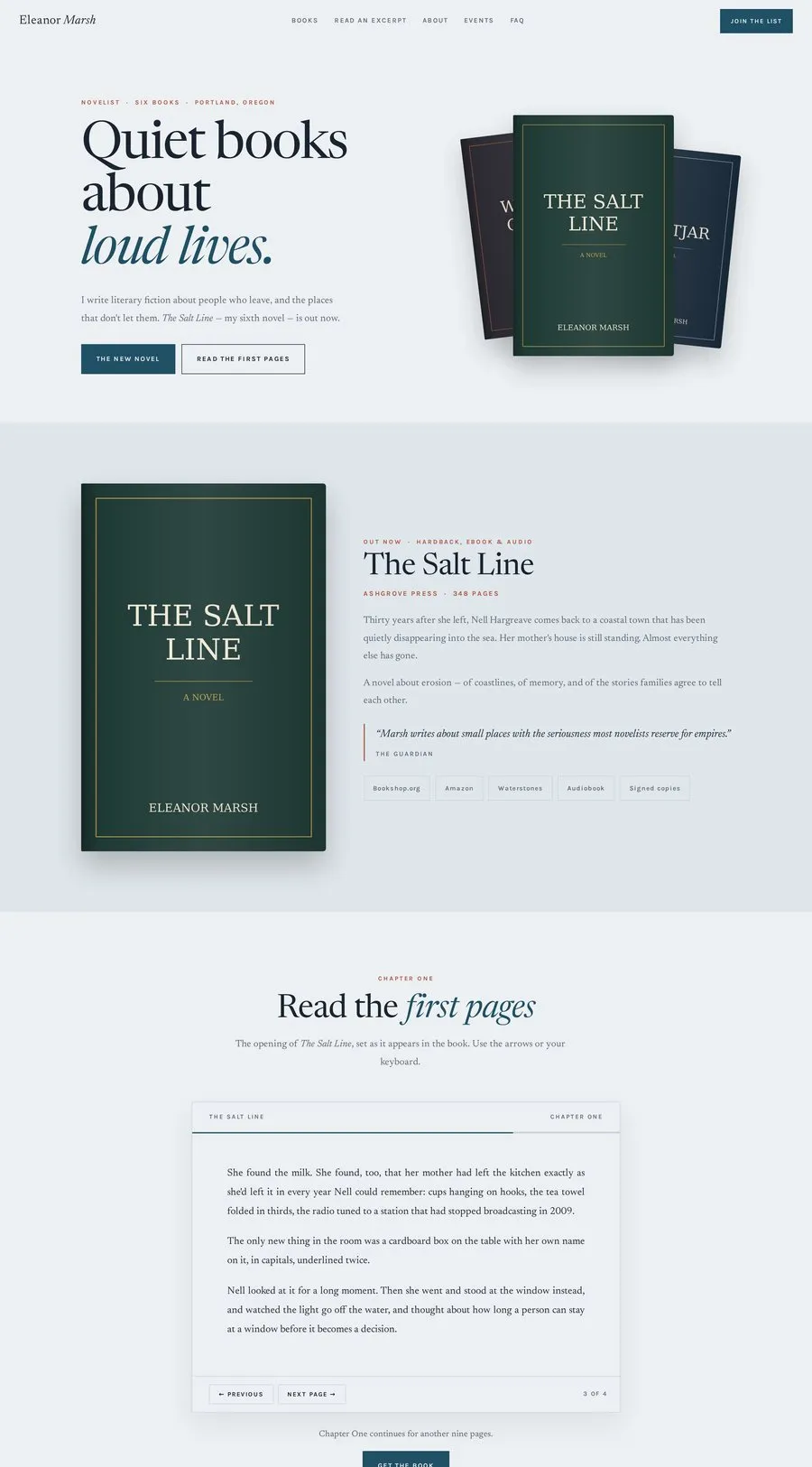

Hover to scroll the pages · Click to open the live demo
Hover to scroll the pages · Click to open the live demo
Who This Template Is Perfect For
Author
A quiet, literary site for authors whose book has to sell itself in the first page. Everything in the preview is a placeholder. The name, the covers, the excerpt and the events are all replaced with yours.
The Process
Two to Four Weeks
Tell me this is the direction. We talk through the book you are leading with, your backlist, and what you want readers to do.
Your covers, blurbs, excerpt, press quotes and event dates. I send a simple checklist so nothing is missed.
I adapt the design to your brand and send it over to review. We go back and forth until you approve the final look.
Domain connected, analytics set up, newsletter connected, and a full handover. After launch, new events and new books come straight to me and are handled as part of your monthly care plan.

Your opening pages, typeset properly, justified text, a real drop cap, and paged navigation with a progress bar. Readers turn pages on your site instead of bouncing to a retailer to use Look Inside, and the button at the end sends them to buy while they are still in the story.

What It Costs
Quoted Separately
$500+A one-time build fee, quoted per project based on how much you want on the site. Hosting and care is a separate monthly cost, quoted at the same time so you see both numbers before committing.
Design adapted to your books, covers and excerpt set in, retailer links wired up, newsletter connected, and launch handled.
From $500, quoted per project. You will have a fixed number in writing before any work begins.
Keeps the site online, fast, secure and backed up, with software kept current.
Separate from the build, quoted at the same time so you see both numbers together. New events, new books and updated press are added for you as part of the plan.
Good to Know
Before We Start
You are choosing a design direction, not buying a file. There is nothing to download or configure. I adapt this look to your brand, build every section around your content and your words, and send it over to review. We go back and forth until you approve the final look, then it goes live on your domain.
You can, but for most authors it is the wrong call. Handling stock, postage and returns eats the time you would rather spend writing, and readers already trust Bookshop.org and their local shop. The demo links out to retailers instead, which is what nearly every working author does. If you do want direct sales, usually for signed copies, I will set that up with Shopify or Stripe and quote it separately.
Check your contract first, most publishing deals allow a chapter or so, but the limit is theirs to set, not mine. Where you have a free hand, the first chapter is the right amount, enough to get someone properly into the voice, short enough that they still need to buy it.
Your publisher will have high-resolution cover files, ask your publicist and they will send them over. If you are self-published you will already have them from your designer. What does not work is photographing a paperback on a table.
You send them to me and I update them. Event dates change more often than anything else on an author site, so they are covered under your monthly care plan. If you would like a section you can edit yourself, we can set that up, just raise it on the onboarding call and we will talk through the options and cost.
I connect whatever you already use, Substack, Mailchimp, Buttondown or ConvertKit. Those charge their own fee once your list grows, separate from anything I quote. If you do not have one yet, start one, for authors it is the single most valuable thing on the site.
Yes. The files, the domain and the content are yours. If you ever move to another host or designer, everything transfers.
No, I work anywhere in the US. If you are local we can meet in person.
Love this template?
If none of the designs fit, I build from a blank page too. Same process, more discovery.
Let's Talk!