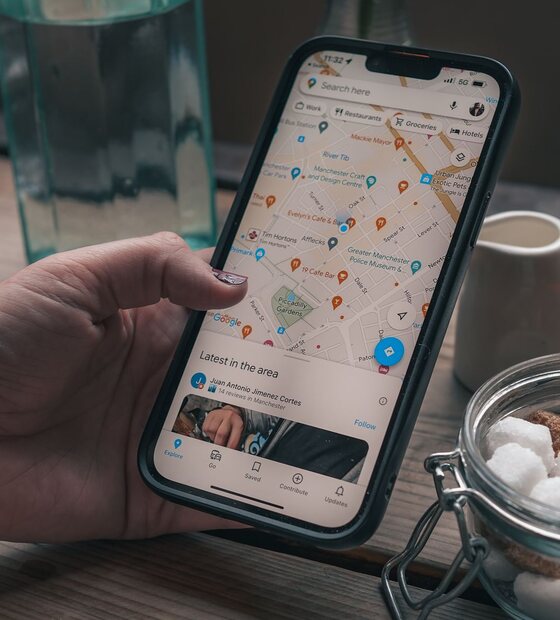
The local pack is the three-result map box that appears at the top of Google when someone searches for a business nearby. On mobile, it occupies most of the screen before a user scrolls. For most local searches, the three businesses in that box get the overwhelming majority of clicks. Being fourth, fifth, or lower is a very different outcome from being in the top three.
Most businesses set up their Google Business Profile once and assume the work is done. The businesses that consistently appear in the local pack are the ones that treat it as something to actively maintain. Here's what that looks like in practice.
How the local pack actually works
Google weights three factors for local ranking: relevance (does your business match what was searched?), distance (how close are you to the searcher?), and prominence (how well-known and credible is your business?). Distance is largely fixed by your address. Relevance can be improved with accurate categories and service listings. Prominence is where the real work is, and it's also where most businesses have the most room to gain ground.
Step 1: Get your profile to 100% completeness
An incomplete profile forces Google to guess about things it could know for certain. Categories, services, hours, photos, description, attributes, products (if applicable), and Q&A should all be filled out completely. This isn't just about checking boxes. Each field you complete is another signal Google can use to match your listing to relevant searches.
The most commonly skipped fields are attributes (wheelchair accessible, appointment required, LGBTQ+ friendly, etc.), the products section for businesses that sell physical goods, and the Q&A section. These fields represent free search real estate that your competitors are probably not using.
Step 2: Review velocity, not just review count
Google values review recency highly. Fifty reviews from two years ago carries less weight than ten reviews from the past three months. This is a meaningful distinction, because most businesses focus on the total count when what matters just as much is whether reviews are still coming in.
Aim for a steady, consistent flow rather than periodic campaigns. If you can generate two or three new reviews per month, every month, you'll outperform most competitors who did a launch push and then stopped. The practical way to do this is to ask every satisfied customer at the natural close of a transaction, and make the link one tap away.
Step 3: Seed your Q&A section
The Q&A section on your Google Business Profile is visible to everyone who views your listing. Anyone can post a question, and if you don't answer it, a stranger might, often incorrectly. More importantly, Google itself sometimes pulls answers from this section to answer voice search queries and featured snippets.
Seed it yourself. Think of the five or six questions your customers ask most frequently: Do you offer free estimates? Do you serve Silver Lake? Is parking available? What's your cancellation policy? Post each question and answer it in full. This gives you control over the information, adds keyword-rich content to your profile, and preempts the most common customer questions before they become phone calls.
Step 4: Post regularly
Google Posts are short updates that appear directly on your profile. They can include offers, event announcements, product highlights, or general updates. They signal to Google that your business is active and current. Most businesses never post. The ones that do are sending a freshness signal that their competitors are not.
You don't need to post every day. Once or twice a week is plenty. A photo of recent work, a seasonal offer, a service reminder. It doesn't need to be long or elaborate. What matters is consistency over time.
Step 5: Your website matters to your Maps ranking
Your GBP links to your website, and your website's quality feeds back into your local prominence. A few specifics that matter:
- Page speed. A slow website reduces engagement. Low engagement from profile clicks is a signal Google can observe.
- Mobile friendliness. Most profile clicks come from phones. A broken mobile experience means visitors leave immediately, and that bounce signal is visible.
- City mentions. Your website should clearly mention the neighborhoods and cities you serve, in real content, not hidden in metadata.
- LocalBusiness schema. Structured data in your site's code tells Google your exact name, address, phone, hours, and service area. This removes ambiguity and strengthens your relevance signals.
Step 6: Engagement signals
Google can see what happens when someone views your profile: do they call? Do they ask for directions? Do they click through to your website? A profile that generates high engagement tends to hold its position better than one that sits dormant.
You can't fake this, but you can help it happen naturally. Make sure your phone number is visible and correct. Make sure your website link is active and goes to the right page. Make sure your address is accurate so direction requests actually lead to you. These seem obvious, but errors in these fields are more common than you'd think, and each one quietly depresses your engagement numbers.
You cannot buy your way into the local pack. But you can outwork the competition with consistency. Most businesses in any given market are doing almost none of this actively. Showing up every week, even briefly, compounds into a significant advantage over twelve months.
For the profile-level specifics in more detail, the full guide to optimizing your Google Business Profile covers every field and setting. And for the broader ranking picture, how to rank on Google Maps connects all of these pieces into a complete strategy.