Most of the local business owners I talk to say the same thing: they know they should be showing up on Google, but they're not sure what's actually required to get there. They've heard about SEO, maybe tried a few things, and still feel like page one is some distant destination that belongs to big brands and businesses with massive marketing budgets.
That's not how local search works. Page one for local searches is largely determined by how well you've done a handful of specific, learnable things. None of them require a big budget. They do require consistency and some patience. Here's the full breakdown.
1. Understand the two different "page ones"
Before you can get to page one, you need to know which part of page one you're actually targeting. When someone searches for a local service, Google typically shows two distinct sections worth caring about.
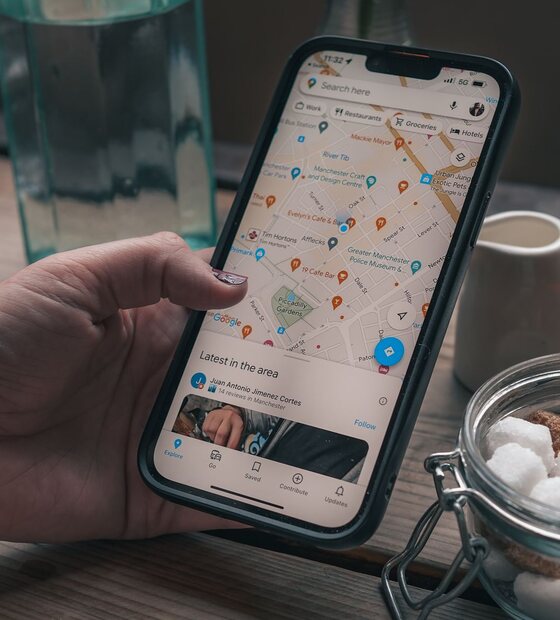
The first is the Local Pack, sometimes called the Maps Pack. It's the block of three business listings with a map that appears near the top of the results. This is driven almost entirely by your Google Business Profile, your proximity to the searcher, your reviews, and how well your profile matches what they searched for. Ranking here is about local authority and profile completeness.
The second is organic results, the standard blue-link listings below the map. These are driven by your website: the quality of its content, how well it's optimized for local keywords, how fast it loads, and how many other credible sites link to it.
You should be targeting both. A strong Maps Pack presence gets you visibility with high-intent "near me" searches. Strong organic rankings build longer-term credibility and capture searches that don't trigger the Maps Pack at all. The good news: the foundational work overlaps significantly. Most things you do to improve one will help the other.
2. Claim and complete your Google Business Profile
Your Google Business Profile (GBP) is the single most important piece of local search infrastructure you have, and it's free. If you haven't claimed it yet, that's step one. Go to google.com/business, verify your listing, and treat every empty field as a missed opportunity.
Here's what a fully optimized profile actually looks like in practice:
- Business name: Your real business name, exactly as it appears on your signage. Don't stuff keywords into it.
- Primary category: The most specific category that accurately describes what you do. "Bakery" beats "Food Establishment" every time. This single field has an outsized effect on which searches you appear for.
- Secondary categories: Add up to nine. Use them for services adjacent to your primary one.
- Services list: Name and describe each service you offer. These descriptions feed into Google's understanding of your relevance.
- Hours: Keep them current, including holidays. Incorrect hours destroy trust with both customers and Google.
- Photos: Real photos, updated regularly. Interior, exterior, team, and work samples. Google's own data shows profiles with photos get more clicks and direction requests.
- Posts: Use the Posts feature to share updates, offers, and announcements. It signals that your profile is actively maintained.
For a deeper walkthrough of every field and what to write, the Google Business Profile optimization guide covers each section in detail.
3. Get your website's on-page SEO right
Your website is Google's primary evidence that your business is what you say it is. If it isn't optimized to communicate your service and location clearly, you're asking Google to guess, and it often guesses wrong.
The most important on-page elements for local SEO:
- Title tags: Every page needs a unique title tag that includes both your primary service and your city. "Web Designer | Designs by Delia" is fine. "Web Designer in Los Angeles | Designs by Delia" is better for local search. This is what appears as the blue headline in Google results.
- H1 headings: Your H1 should match how real customers phrase their search. Think "Custom Web Design for Los Angeles Small Businesses," not just "Welcome."
- Location pages: If you serve multiple neighborhoods or cities, dedicated pages for each area outperform a single generic service page. A page specifically about web design in Silver Lake will rank for Silver Lake searches in ways your homepage never will.
- NAP in the footer: Your name, address, and phone number should appear in the footer of every page, formatted exactly the same way as on your GBP. Google cross-references these to confirm your business is legitimate and consistent.
- LocalBusiness schema: This is structured data markup (a block of code invisible to visitors but readable by Google) that tells Google your hours, address, phone number, and service area in a format it can directly index. Without it, Google has to infer this information from your page text. With it, there's no ambiguity. Most good web designers include this automatically; most DIY website builders do not.
If your current website is missing these signals, it isn't competing, regardless of how good it looks visually. See what a properly built local business website includes over on the local SEO services page.
4. Build reviews consistently, not in bursts
Reviews are one of the most visible ranking signals in local search, and Google weighs both the total number and the recency. A business with 60 reviews, the last one from 18 months ago, looks less relevant than a business with 25 reviews spread across the past year. Recency tells Google you're still active and still worth recommending.
The single most effective thing most local businesses can do here is simple: ask. Most happy customers don't leave reviews not because they didn't want to, but because no one made it easy. A direct text or email with your Google review link, sent right after a completed job or positive interaction, converts at a much higher rate than a sign in your window or a request buried in an invoice.
A few things to build into your process:
- Create a short link directly to your GBP review form and save it somewhere easy to paste.
- Ask at the right moment: right after the customer expresses satisfaction, not a week later.
- Respond to every review you receive, positive and negative. Responses show both Google and future customers that you're engaged.
- Never buy reviews or ask friends to leave fake ones. Google detects patterns and will filter or penalize them.
For the full strategy on getting more reviews and keeping them coming in, this post on Google reviews breaks down the mechanics in detail.
The businesses dominating the local pack aren't there because of a one-time campaign. They got there by doing the right things consistently over several months: updating their profile, collecting reviews, adding content, building local links. Consistency beats intensity in local SEO every time.
5. Build locally relevant backlinks
A backlink is when another website links to yours. For local SEO, what matters most isn't just the quantity of those links: it's whether they come from sources Google associates with your geographic area. A link from a neighborhood blog, your local Chamber of Commerce, or a regional publication sends a much stronger local relevance signal than a link from a generic national directory.
You don't need hundreds of backlinks to compete in most local markets. A handful of quality, locally relevant ones will move the needle more than fifty low-quality directory listings. Here's where to start:
- Chamber of Commerce: Join your local chamber. The directory listing alone is worth it, and it's often one of the first things Google trusts as a local authority signal.
- City and neighborhood directories: Many cities and Business Improvement Districts maintain online business directories. Get listed.
- Local press: Sponsor a local event, host a workshop, or offer to be a source for a neighborhood publication. Even a single mention with a link from a local news site carries significant weight.
- Partner businesses: If you work with complementary businesses (a florist who regularly works with event venues, for example), a mutual link exchange makes sense and reads as natural to Google.
- Industry associations: For service businesses especially, being listed on your professional association's member directory adds both credibility and a relevant link.
This is one of the slower parts of local SEO to build, but it's also the hardest for competitors to replicate quickly. Starting early matters.
6. Make your site fast and mobile-ready
More than half of local searches happen on phones. If your site takes four seconds to load on a mobile connection, most of those visitors are gone before they've read anything. Speed isn't just a user experience issue: Google uses Core Web Vitals (a set of load speed and responsiveness metrics) as a ranking factor. A slow site actively suppresses your rankings, even if everything else is done correctly.
Test your site right now at PageSpeed Insights. Look at the mobile score specifically, not just desktop. Mobile and desktop results often differ significantly, and mobile is what Google primarily uses to evaluate your site.
Common speed problems on small business sites:
- Images that weren't compressed before uploading. A 4MB photo from a phone doesn't need to be 4MB on a web page.
- Bloated page builders loading dozens of scripts and style files that the page doesn't actually use.
- No caching set up, so the server rebuilds the page from scratch for every visitor.
- Hosting on a cheap shared server with slow response times.
Beyond speed, mobile-readiness means your layout actually works on a 375px screen. Buttons are large enough to tap. Text is readable without zooming. Forms are easy to fill in. If any of these fail, you're losing conversions even from visitors who did find you. The guide to what makes a good small business website goes deeper on what mobile-ready actually means in practice.
7. Be patient, but be consistent
Local SEO is not a one-time project. It's an ongoing practice. Most businesses that do the foundational work correctly start to see measurable movement in their Maps Pack position within two to three months. Organic rankings can take longer, sometimes four to six months before you see significant shifts, depending on how competitive your market is.
The businesses that reach page one and stay there aren't doing heroic things. They're doing ordinary things consistently: keeping their GBP updated, responding to reviews, publishing content occasionally, and checking their rankings every few weeks to see what's working.
A few habits worth building:
- Review your GBP at least once a month. Update your photos, check your hours, post an update.
- Track your rankings with a free tool like Google Search Console. It shows which queries bring people to your site and where you're appearing.
- Add a new piece of content to your website every month or two. A short blog post answering a question your customers regularly ask is enough.
- Monitor your reviews and respond within a day or two. Fresh responses signal activity to both Google and potential customers.
If you want a structured month-by-month task list, the local SEO checklist for small businesses lays it all out with specific actions for each area.
Where to focus first
If you're just starting, don't try to do everything at once. Work through this in order. Your Google Business Profile is the highest-leverage starting point because it directly controls your Maps Pack visibility, which is where the most high-intent local traffic lives. Once your profile is complete and verified, move to your website's on-page signals. Then build your review process. Then backlinks.
The full picture takes time to come together, but every piece you put in place compounds. A business that works through this list methodically over six months will outrank competitors who've been in business for decades but never touched their local SEO. That's the opportunity here for LA small businesses: most of your competition hasn't done this work. Doing it puts you ahead.
For a professionally built site that handles the technical side from day one, including schema markup, properly structured location pages, and GBP integration, see what's included in the local SEO services or the web design packages.